
Impact to Emergency Services

Understanding the factors contributing to increasing costs

Group portrait of 18 Evergreen Fire Rescue personnel in uniform posing in front of a red fire rescue vehicle.

Without new revenue, emergency services and response will begin to be impacted by 2027.

With new revenue, the following critical operational and safety areas would be funded:

Increasing Costs

The cost of emergency equipment and apparatus continues to increase. For example, five years ago, a new engine cost $650,000, today, the cost is estimated at $1.4 million and personal protective equipment, medical supplies and more have all increased 55% over the past ten years.

Here’s a comparison of the increased costs for emergency vehicles that reach the end of their useful life and must be replaced.  
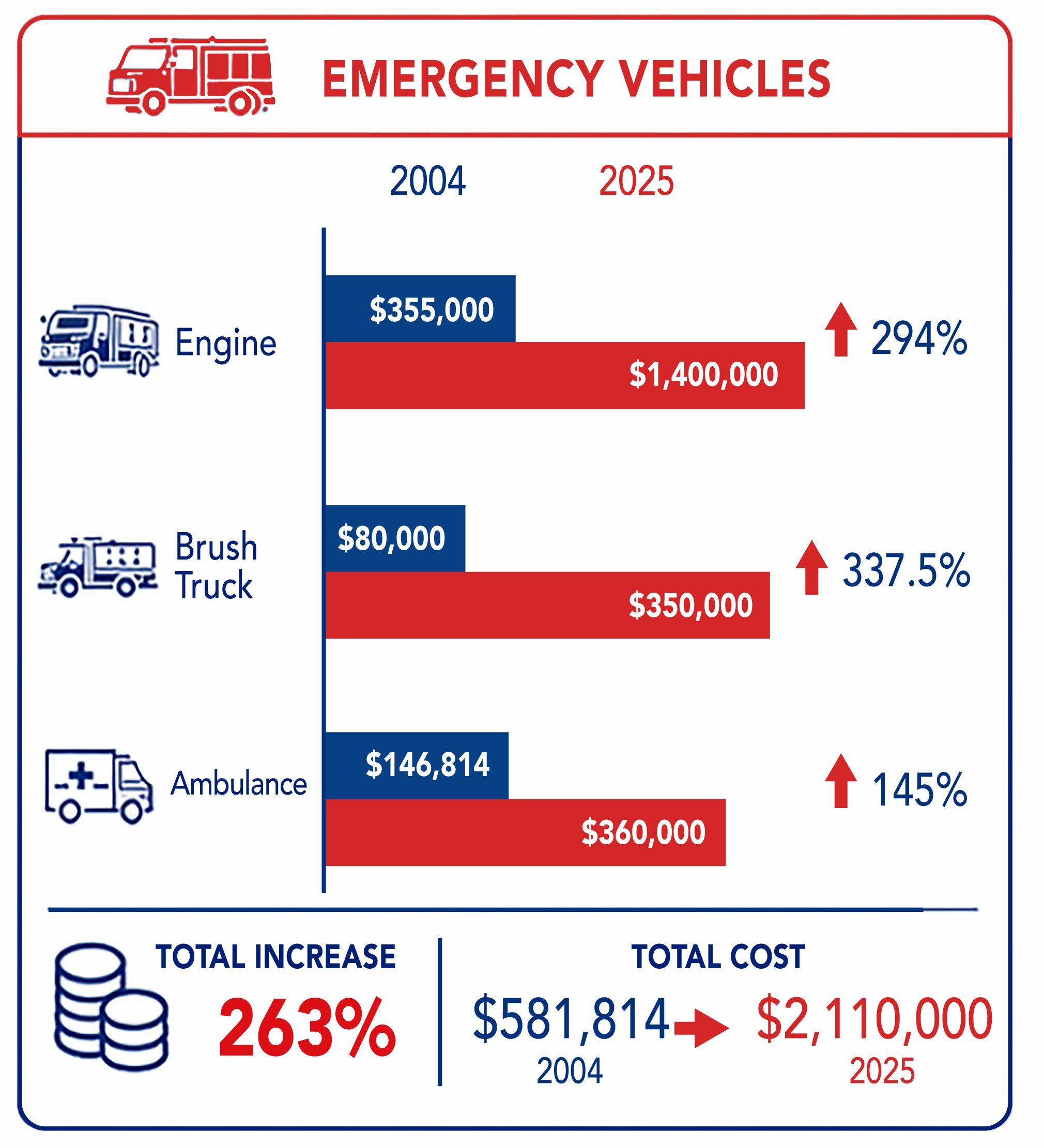
Cost comparison of emergency vehicles showing increase from 2004 to 2025: Engine from $355,000 to $1,400,000 (294%), Brush Truck from $80,000 to $350,000 (337.5%), Ambulance from $146,814 to $360,000 (145%), with total cost rising from $581,814 to $2,110,000, a 263% increase.

Here is a comparison of medical equipment and supplies, many of which are used nearly every day.
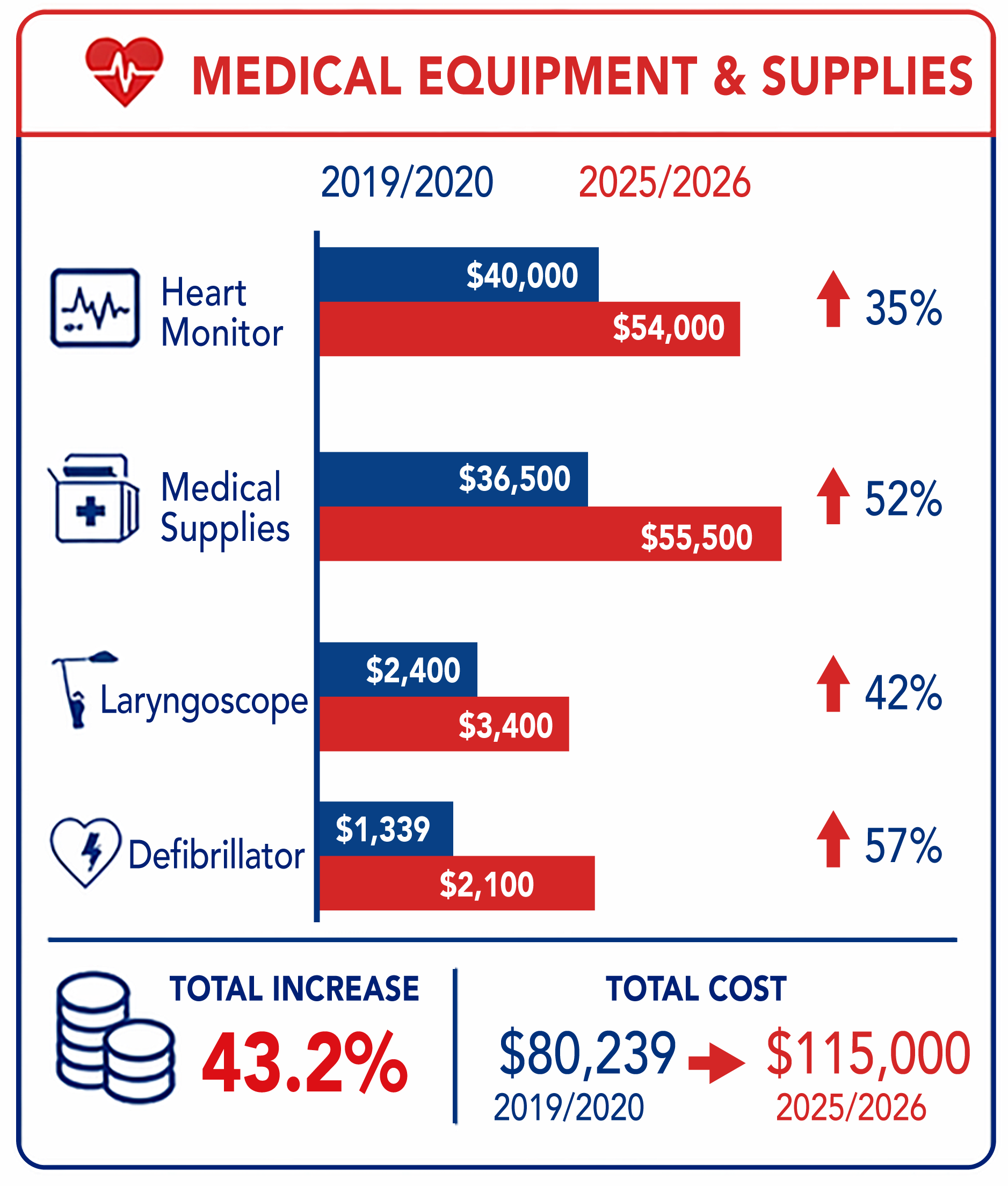
Bar chart comparing costs of medical equipment and supplies from 2019/2020 to 2025/2026, showing increases: heart monitor from $12,800 to $54,000 (350%), medical supplies from $36,500 to $55,500 (62%), laryngoscope from $2,400 to $3,400 (42%), and defibrillator from $1,339 to $1,529 (14%), with a total cost increase of 119% from $52,239 to $114,429.

Here is a cost comparison of the protective equipment essential for our firefighters to safely and effectively do their job. 
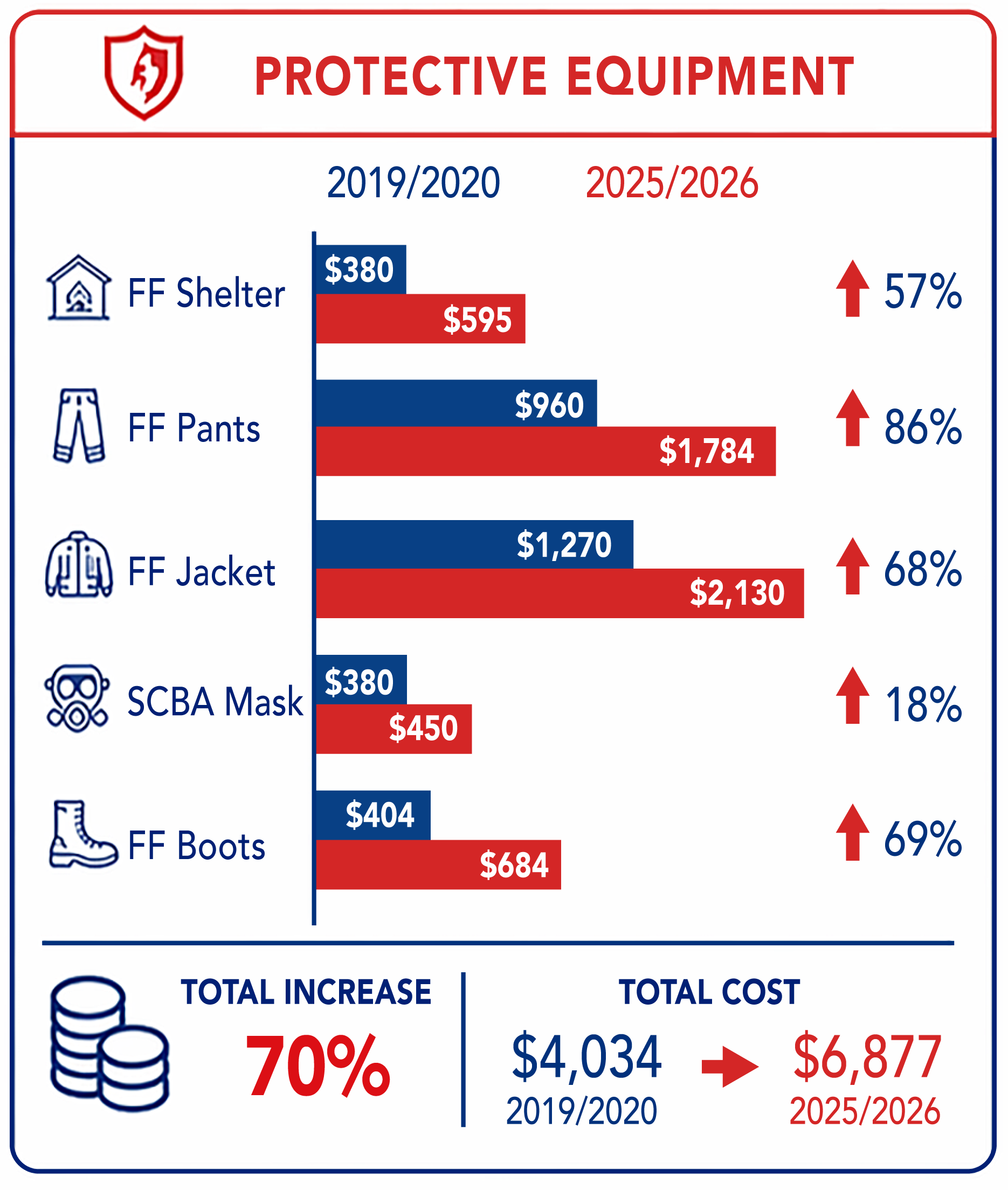
Bar chart comparing protective equipment costs from 2019/2020 to 2025/2026 showing increases: FF Shelter from $380 to $595 (57%), FF Pants from $960 to $1,784 (86%), FF Jacket from $1,270 to $2,130 (68%), SCBA Mask from $380 to $450 (29%), and FF Boots from $404 to $684 (69%); total increase 70%, total cost rising from $4,034 to $6,877.